
Wet Markets
Wet Markets are Singapore's version of the bustling, disorientating markets that every city considers part of its soul. Take a look at how wet markets have evolved over time in this newsletter!

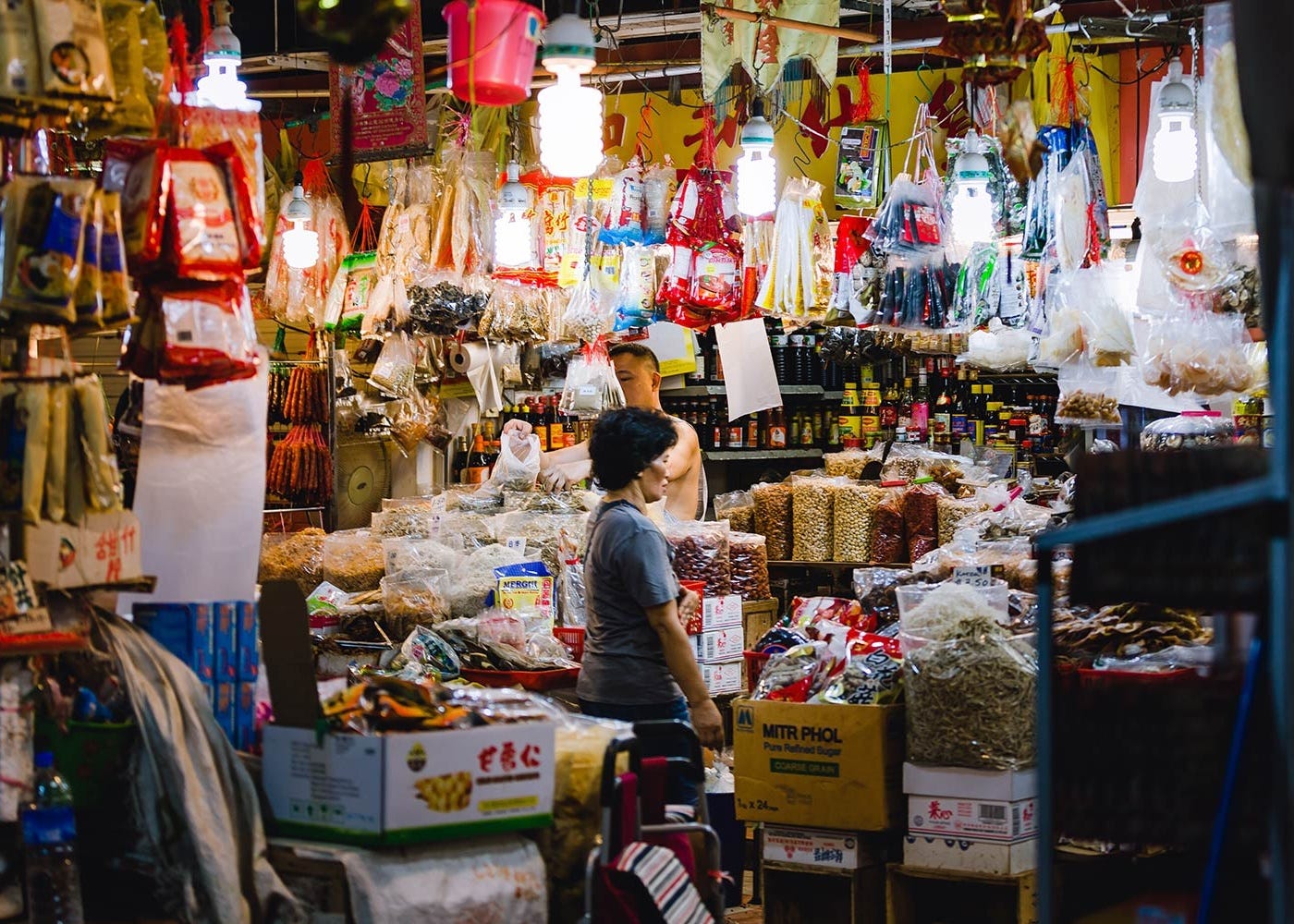
There is beauty in chaos and warmth in unfamiliarity, especially as you meander your way through the corridors of the wet market, often as they overflow with cartons and boxes.
Every major city in the world will usually retain a central market, driven by smallholders, as a memorial of sorts amidst all the supermarkets and hypermarts that have become the source of our groceries. Madrid has the now-modernised San Anton Market, Tokyo has the seafood-focused Toyosu Market, and Seattle’s Pike Place Market has established itself as the birthplace of Starbucks.
Often distinguished by the killing of live animals within the wet markets themselves (although no longer as common), these long-running establishments have recently come under attack, due to ignorance and misunderstanding, for spreading diseases and viruses (these are limited to the unregulated handling of exotic or endangered animals).1 These generalisations forget that markets, in their original unadulterated forms, are important gathering points for communities where an appreciation for food, people and craft triumph. 2
Singapore is lucky to have more than 107 wet markets3, an anomaly amongst highly developed cities, and while we may acknowledge their importance to our culture, it’s becoming apparent that together with hawker culture, we cannot take them for granted.
Check out the Podcast!
Have your heard of Kebun Baru Market and the unfortunate fire that happened there? Or did you know that you can get some of the most unique flowers around at Tekka Market? Join Elliot and I as we explore the various wet markets in Singapore, in our latest episode! Be sure to click on that Follow/Subscribe button!
The Past
As we discussed in the podcast, markets have existed for a long time in Singapore, albeit as disorganised gatherings of farmers, fishmongers and butchers who would congregate and tout their goods. It was only when the British came and implemented more coordinated town planning measures that we began to see the introduction of built up markets.
Telok Ayer Market
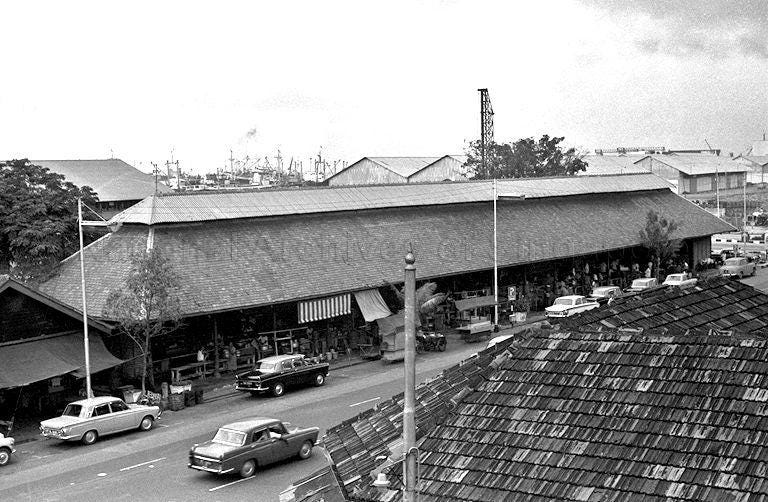
Known as the first market in Singapore4, it was originally located on the south bank of the Singapore River. It was then moved to Teluk Ayer Bay when the government acquired the land for commercial use. As can be seen from the picture, the market was just a simple wooden structure with an attap roof, and it stood till 1836.5
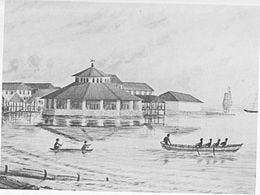
The second incarnation of Telok Ayer Market was designed by George Drumgoole Coleman, with an octagonal design using ornamental columns at the entrance. This iteration lasted till 1879, when it had to be demolished due to land reclamation. By this point, as Ellenborough Market (or New Market) had opened up, the Telok Ayer Market became the Lau (Old) Pa Sat (Market).
On the newly reclaimed land, municipal engineer James MacRitchie (sounds like a reservoir!) designed a new building for the market, simply adapting Coleman’s designs and reinforcing the columns with steel. Fun fact: this iteration of the market had a fountain in the centre that was first moved to Orchard Road and now sits in the Raffles Hotel.
In 1973, the Telok Ayet Market was gazetted a National Monument and was converted to a food centre, losing the market.
Ellenborough Market
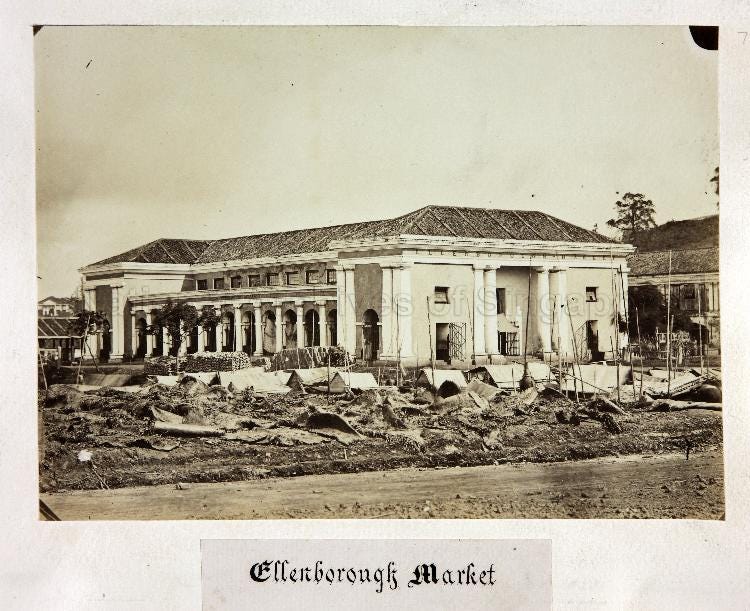
The second major market in Singapore, where Clarke Quay now is, was known by a number of names6, inclduing:
Teochew Market, because the area was a Teochew enclave
Pasar Bahru, which means "New Market" in Malay, which also gave the name to New Market Road
Ellenborough Market, named after Edward Law, the 1st Earl of Ellenborough and the Governor-General of India (1841-1844)
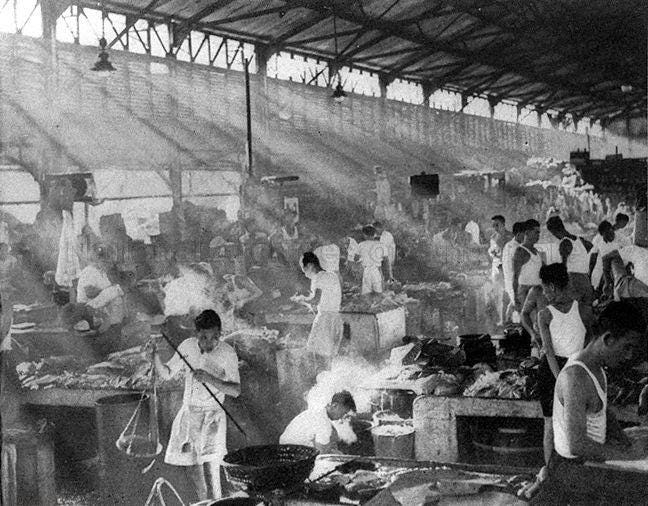
The market was well-known for selling fresh fish and dried seafood products, even hosting fish auctions. However, the eponymous Ellenborough Street was disturbed by regular gambling and opium smoking by the Chinese immigrants and coolies. Thefts, robberies and gang fights were also known to occur frequently in the area.7 Eventually, after the 1970s, the market closed down to make way for more development on the riverside.
We need your support!
We love that you enjoy our independently produced content, and together with an emerging class of content creators out there, we need your help to grow to a level where we are sustainable and equipped to deliver better content.
While we continue to work with aligned partners and brands, monthly subscriptions help normalize and significantly de-risk our base revenue. (Blake Robbins). The world is changing and we are grateful for the listeners and readers who show their support in a tangible way through contributing via subscriptions. If you have already paid for a subscription, you can also gift a subscription to a friend or family member as a way to also help us spread the word on SGExplained. Thank you in advance!
The Present
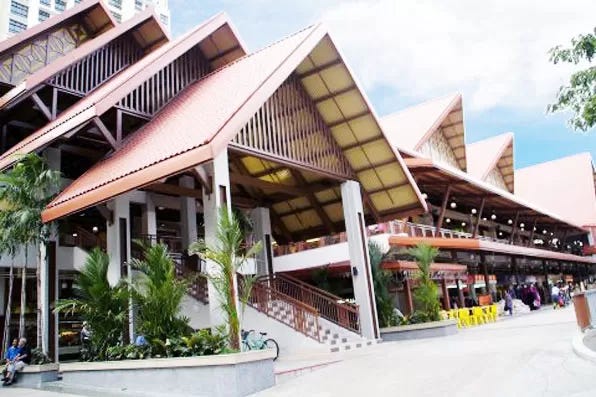
Wet markets still exist in Singapore, often attached to a hawker centre, and continue to be a good place for getting one’s groceries. Compared to supermarkets, wet markets are argued to be more environmentally friendly and ethical as stall owners often source regionally and from trusted producers. They also can procure specific ingredients for loyal customers, especially if it’s for a specific ethinc cuisine. It’s also obvious that wet markets can often be more affordable than supermarkets as the involvement of middlemen is reduced and the stall owner is able to exercise some flexibility (read: loyalty bargains) for customers they trust.8
While the government had commited in 2011 to build 10 new markets in the next decade, the report card is due and no new markets could be traced. However, most of the existing markets have undergone major upgrading works, in the millions of dollars, to keep them usable and safe for both stall owners and customers. This may be a recognition, in a smaller form therefore, that wet markets are an important part of our cultural fabric.
The Future
Having established that wet markets play an important role in Singapore, it is unfortunate then that they face an existential risk. A National Environment Agency (NEA) survey conducted in 2018 found that 39 per cent of Singaporeans had not been to a wet market in the previous 12 months. The number has been steadily rising. In 2016 and 2014, the corresponding figures were 33 per cent and 23 per cent respectively.9
Data from the Department of Statistics showed that there were 6,264 NEA-licensed hawkers selling market produce in 2006. In 2016, this number fell 12.4 per cent to 5,485.10
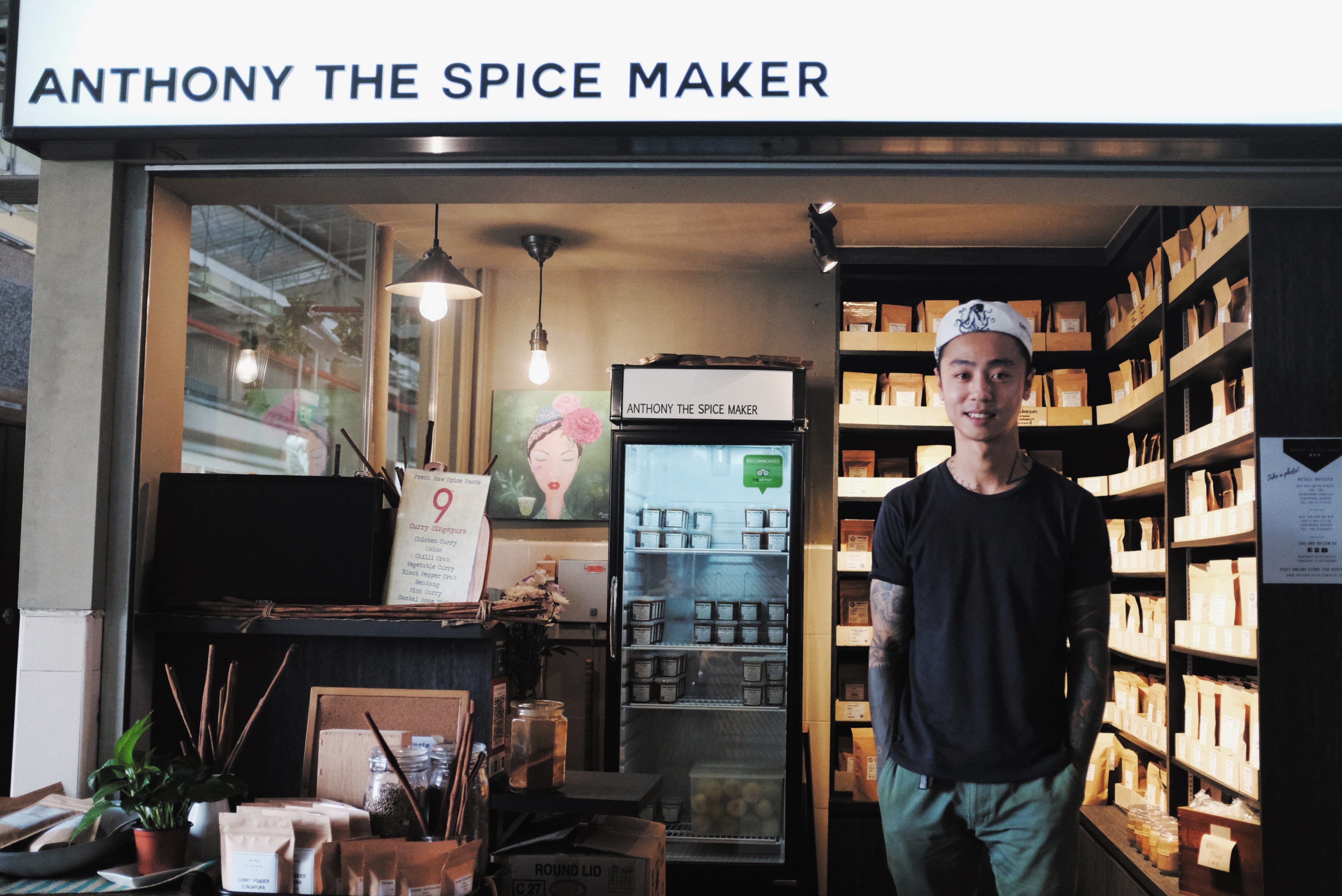
Does this mean that all is lost? Maybe not. Profiles of millenials who are attempting to revive or sustain the wet market sector, through the use of technology or better marketing, have made their way into the news including Anthony the Spicemaker11, Marcus Phang the Fishmonger12, and a flurry of online livestreaming vendors such as Seafood Boy13. One thing is for sure, wet markets are not likely to look the same int he future.
What does this mean for the Singaporean identity?
Elliot and I are biased towards preserving wet markets. We’ve had fond memories accompanying our parents to the markets and observing them build relationships with the people who made sure we had the best cuts of fish or meat as well as the freshest vegetables. I’ve also always joked that every self-respecting adult needs their own go-to butcher and fishmonger, and wet markets allow you to develop that trust with individuals.
While livestreaming and online delivery services may allow wet markets to continue in some form, they also strip away the important community feature in these bustling centers - the opportunity to mingle, exchange greetings and feel connected. What do you think - what do the future of wet markets look like for you?
Sources:
Why shutting down Chinese ‘wet markets’ could be a terrible mistake - The Conversation
Urban markets as a ‘corrective’ to advanced urbanism: The social space of wet markets in contemporary Singapore - Mele et. al., 2014
Community Heritage Series II: Wet Markets - National Heritage Board
Kip Lin Lee (1983). Telok Ayer market: a historical account of the market from the founding of the settlement of Singapore to the present time. Archives & Oral History Dept., Singapore.
Telok Ayer Market - Penang Travel Tips
The little-known Ellenborough Market near Clarke Quay has a special relationship with Lau Pat Sat - Mothership
The Disappearance of the Historic Ellenborough Street - Remember Singapore
Pasar: What makes Singapore’s wet markets unique? - The Kontinentalist
As young home cooks seek convenience, the fate of Singapore’s wet markets hangs in the balance - Today
Few willing to take over their parents’ sundry, fresh food stalls; experts suggest making them hip - The Straits Times
Changing the face of the wet market to appeal to new customers - The Straits Times